


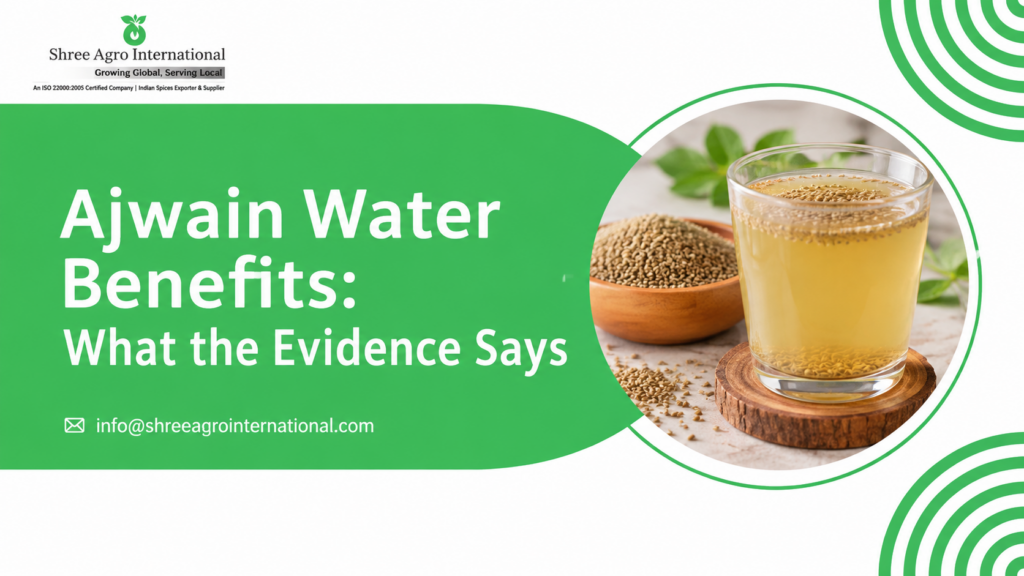
In almost every Indian home, someone has a small jar of ajwain in the kitchen. When a heavy meal sits badly, out comes a pinch of seeds and a glass of warm water. It is one of the oldest home remedies we know.
What Is Ajwain Water?
Ajwain water is simply water in which ajwain seeds have been soaked or boiled, then strained.
The seeds release their natural aromatic oil, mainly thymol. That is what gives the drink its sharp, thyme-like taste and its familiar warming feel.
It goes by many names across India:
| Region | Name of the drink |
|---|---|
| Hindi-speaking states | Ajwain ka pani |
| Tamil Nadu & Kerala | Omam water |
| Andhra Pradesh & Telangana | Vamu water |
| English | Carom seed water |
All of them are the same drink, made from the same seed — Trachyspermum ammi. Want to know more about its many names? Read our guide to ajwain in English and its regional names.
How to Make Ajwain Water at Home
There are two easy methods. Both use ordinary kitchen amounts of the spice.
Method 1: The Overnight Soak (milder)
- Add 1 teaspoon of ajwain seeds to a glass of water (about 250 ml).
- Cover and leave it overnight.
- Strain in the morning and drink at room temperature or slightly warmed.
Method 2: The Boiled Version (stronger)
- Add 1 teaspoon of seeds to a glass of water in a small pan.
- Bring to a boil and simmer for 3–5 minutes.
- Cover, let it cool until warm, then strain.
Trader’s tip: Lightly crush the seeds before you soak or boil them. Roll a steel glass over them or give them a few taps in a mortar. Crushing opens the seed and releases far more aroma into the water.
A few simple rules
- Use fresh, clean seed. Old ajwain loses its oil and gives a flat, weak drink.
- Start plain. You can add black salt, lemon or honey later, purely for taste.
- Make it fresh every day. Don’t leave soaked seeds in water for days.
- Keep it moderate. One glass a day is how it is traditionally used.
There is no established medical dose for ajwain. For a useful comparison, Europe’s medicines regulator suggests that tea made from fennel — a close cousin of ajwain — be taken at 1.5 g per cup, three times a day, for no more than two weeks. Even gentle seed teas are meant for short-term use.
Ajwain Water Benefits: An Honest Evidence Check
Let’s look at each popular claim and what stands behind it.
| Claim | Evidence behind it | Our honest verdict |
|---|---|---|
| Eases bloating & gas | Traditional use, animal studies, one small human trial | Best-supported use, but not yet conclusive |
| Speeds up digestion | Studies in rats | Plausible, not confirmed in people |
| Relieves acidity | Mostly traditional use | Helps some people, worsens it for others |
| Helps weight loss | No human trials | Not proven |
| “Detoxes” the body | No credible evidence | Not supported |
| Fights bacteria | Test-tube studies on ajwain oil | Lab results don’t apply to a weak drink |
| Soothes cough & cold | Traditional use | Warm fluids feel soothing; specific effect unproven |
1. Digestion — the strongest case
This is what ajwain has been trusted for over generations, and the research leans the same way.
In animals: A 2001 study in Nutrition Research fed rats diets containing 14 different spices for six weeks. Ajwain was among the spices that most clearly shortened food transit time — the time food takes to move through the gut — alongside ginger, cumin and coriander.
In people: A 2017 double-blind trial of 150 adults with chronic indigestion tested a traditional remedy made of celery and ajwain against a common acid medicine and a placebo. Over eight weeks, the herbal group reported less bloating, fullness, belching and nausea.
Keep in mind: That trial used a two-herb product, not ajwain water. So it supports ajwain as a digestive spice, but it doesn’t prove that a glass of ajwain water will do the same.
The takeaway: Ajwain water may help you feel lighter after a heavy meal. It should not replace medical care for ongoing indigestion, reflux, ulcers or stomach pain.
2. Weight loss — the weakest case
This is the most searched claim of all — and the least proven.
We could not find a single controlled human trial showing that ajwain water causes weight loss. If people notice a change, it usually comes from other habits they started at the same time, like eating lighter dinners or swapping sugary drinks for a zero-calorie one.
That swap is a genuine, if modest, benefit. But ajwain water is not a fat burner.
3. Acidity — it depends on you
Ajwain is a strong, pungent spice. Some people find a warm cup settles their stomach. Others find that strong spices make heartburn worse. If you feel a burning sensation after drinking it, stop.
Ajwain Water Side Effects: Who Should Be Careful
For most healthy adults, ajwain in normal food amounts is safe. Regular, concentrated use is different. Please take extra care if any of these apply to you:
- Pregnancy and breastfeeding — Professional references such as the Drugs.com monograph on bishop’s weed advise avoiding medicinal amounts of ajwain during pregnancy and breastfeeding. A pinch in cooked food is common, but ask your doctor before drinking it daily.
- Heartburn, reflux or ulcers — Pungent spices can aggravate symptoms in some people.
- Blood thinners — Lab studies suggest ajwain may affect blood clotting. Check with your doctor if you take blood-thinning medicine or have surgery coming up.
- Allergies — If you are allergic to celery, fennel, coriander or dill, you may react to ajwain too, as they all belong to the same plant family.
- Young children — Don’t give home remedies to infants or small children without a paediatrician’s advice.
- Ajwain oil and ajwain sat — These are highly concentrated extracts, far stronger than seed water. They are not for home dosing.
A good rule of thumb: If you have diabetes, high blood pressure or any condition that needs medicine, never use ajwain water as a replacement for that medicine.
Jeera Ajwain Saunf Water: The Three-Seed Favourite
Jeera ajwain saunf water brings together three of India’s best-loved after-meal spices: cumin, carom and fennel. It is especially popular in North Indian homes — and for good reason. The three seeds balance each other beautifully.
| Seed | Natural aroma compound | What it adds to the cup |
|---|---|---|
| Ajwain (carom) | Thymol | Sharp, thyme-like warmth |
| Jeera (cumin) | Cuminaldehyde | Earthy depth |
| Saunf (fennel) | Anethole | Gentle, anise-like sweetness |
How to make it
- Take ½ teaspoon each of jeera, ajwain and saunf.
- Add to a glass of water and either soak overnight or simmer for 3–5 minutes.
- Strain and sip warm.
Fennel’s sweetness softens ajwain’s bite. That is why many people find the three-seed drink easier to enjoy every day than ajwain water alone.
What the research says about each seed
- Fennel has the strongest official recognition. The European Medicines Agency accepts fennel tea as a traditional remedy for mild bloating and gas — while advising against it in pregnancy and breastfeeding.
- Cumin has a small human study: 88 overweight women who added 3 g of cumin powder to yogurt daily for three months, along with diet advice, saw drops in weight and body fat. That was cumin eaten with food, not cumin water. Read more in our article on cumin seed benefits for daily health.
- Ajwain is supported mainly for digestion, as covered above.
Bottom line: The three-seed blend itself hasn’t been studied as a product. Enjoy it as a comforting traditional drink — not as a proven weight-loss or detox formula.
Why Seed Quality Matters More Than You Think
Here is something we have learned from over three decades of handling seed spices in Unjha.
When you cook ajwain into a curry, it simmers for a long time. When you soak it in water and drink it, the seed goes almost straight into your cup. That makes cleanliness and freshness far more important.
Five things separate a good ajwain lot from a poor one:
- Aroma — Bold, fresh seed from a good crop is rich in thymol. Old or badly stored seed gives a weak drink.
- Cleanliness — Proper machine cleaning removes dust, stalks, stones and other seeds. India’s official Agmark grades set strict limits on foreign matter.
- Microbiology — For any seed sold for teas or infusions, Salmonella must be absent, with tight limits on yeast, mold and total bacteria.
- Residues — Seed sold to Europe, the UK or the USA must meet that market’s pesticide limits. IPM and certified organic farming lower that risk.
- Moisture — Seed stored damp loses its aroma and can grow mold. Dry, well-packed seed holds its quality far longer.
We check every one of these points in our in-house quality control lab, with third-party testing available whenever a buyer asks for it.
For Brands: Building a Digestive Seed Blend
Ready-to-steep “after-meal” blends and herbal seed teas are finding more space on shelves across India, the Middle East and diaspora grocery stores worldwide. If you are planning one, these six points will save you trouble later:
- Buy each seed to its own spec, then blend. Ajwain, cumin seeds and fennel need different cleaning. Blending clean, graded lots gives a more consistent cup.
- Ask for microbiology reports on every lot — not just a one-time certificate.
- Choose IPM, organic or conventional early. This decision shapes your cost, residue limits and label.
- Keep label claims simple. Words like “cures”, “burns fat” or “detox” can cause trouble with food regulators. “A traditional after-meal blend of carom, cumin and fennel” is safer — and still appealing.
- Protect the aroma with good packaging. Heat, light and air fade volatile oils quickly. [CLIENT INPUT: confirm private-label pack formats available, e.g. pouch sizes or pre-blended packs]
- Start with samples. Test the cup, the aroma and the lab report before you place a bulk order.
Why Brands Trust Shree Agro International
Since 1988, we have been sourcing and exporting seed spices from Unjha, Gujarat — India’s spice city. Our farmer network stretches across the country’s main seed-spice belts.
- Government of India–recognized Three Star Export House
- Exporting to 40+ countries across the USA, UK, Europe, the Middle East and Asia
- IPM, certified organic and conventional ajwain, cumin and fennel
- Audited processing unit with automated cleaning, grading and sorting, plus an in-house QC lab
- Certified — BRC Food Safety, USDA Organic, EU Organic, FDA registration, HACCP, Kosher and Halal
- Private label and custom packaging, with samples available (buyer pays shipping)
Frequently Asked Questions
What are the benefits of drinking ajwain water?
Ajwain water is traditionally used to ease bloating, gas and heaviness after meals. Animal studies suggest ajwain can speed up digestion, and a small human trial of an ajwain-and-celery remedy reported less indigestion. Claims about weight loss, detox or curing disease are not supported by good evidence. It is best enjoyed as a gentle, food-based digestive drink.
Can I drink ajwain water on an empty stomach?
Many people drink ajwain water first thing in the morning, and most healthy adults tolerate it well. However, there is no evidence that it works better on an empty stomach than after meals. If you have heartburn, reflux or ulcers, a pungent drink on an empty stomach may cause discomfort, so try it after food instead.
How much ajwain should I take in a day?
There is no established medical dose for ajwain. Traditionally, about one teaspoon of seeds is used to make one glass of ajwain water, usually once a day. Concentrated extracts such as ajwain oil are very different and should only be used on professional advice. If you plan daily, long-term use, speak to your doctor first.
Does ajwain water help with weight loss?
There are no controlled human studies showing that ajwain water causes weight loss. Any change people notice usually comes from wider changes in diet and routine, such as replacing sugary drinks. Ajwain water can be part of a healthy routine, but it is not a fat-burning drink. Diet quality, portion size and activity matter far more.
Is ajwain water safe during pregnancy?
Small amounts of ajwain in cooked food are common in Indian diets, but medicinal amounts are a different matter. Professional references advise avoiding concentrated ajwain preparations during pregnancy and breastfeeding because safety data are limited. Pregnant or breastfeeding women should ask their doctor before drinking ajwain water regularly.
What is the difference between ajwain water and jeera ajwain saunf water?
Ajwain water uses only carom seeds and has a sharp, thyme-like taste. Jeera ajwain saunf water adds cumin and fennel in roughly equal parts, which makes it milder and slightly sweet. All three are traditional digestive spices from the same plant family. Fennel has the strongest official recognition for bloating, but the three-seed blend itself has not been clinically studied.
What are the side effects of ajwain water?
In normal amounts, ajwain water is well tolerated by most adults. Too much can cause nausea, stomach upset or heartburn. People who are pregnant or breastfeeding, take blood thinners, have ulcers or reflux, or are allergic to celery, fennel or similar plants should be careful and seek medical advice first.
Bring the Real Taste of Indian Soil to Your Brand
A good cup of ajwain water starts long before the kettle — in the field, at harvest, and on the cleaning line. Whether you pack whole carom seeds for retail or build your own jeera–ajwain–saunf blend, we’ll help you source seed that is clean, aromatic and export-ready.
Tell us your market, preferred grade (IPM, organic or conventional), packaging and volume — and we’ll send you a specification sheet and samples.
Email: info@shreeagrointernational.com
Phone / WhatsApp: +91 96388 25444
Address: Shree Agro International, Visnagar Road, Unjha – 384170, Gujarat, India
